Imagine the ordinary sandwich you make at lunchtime. Two slices of bread, a preferred filling, perhaps a touch of mayonnaise, and lunch is sorted. The question becomes different when you are limiting carbohydrates.
You may not need to change the filling at all; switching the bread could make a meaningful difference. The carbohydrate content of two slices is a useful starting point for anyone exploring keto-friendly meals.
Why Compare Bread by the Sandwich?
Searching for the lowest bread carbs can lead to confusing product comparisons. Carbohydrate figures may be listed for each slice, as determined by the loaf. A more practical approach is to consider the amount you usually serve. If you typically prepare a two-slice sandwich, calculate the carbohydrate content of the full bread portion before adding the ingredients inside.
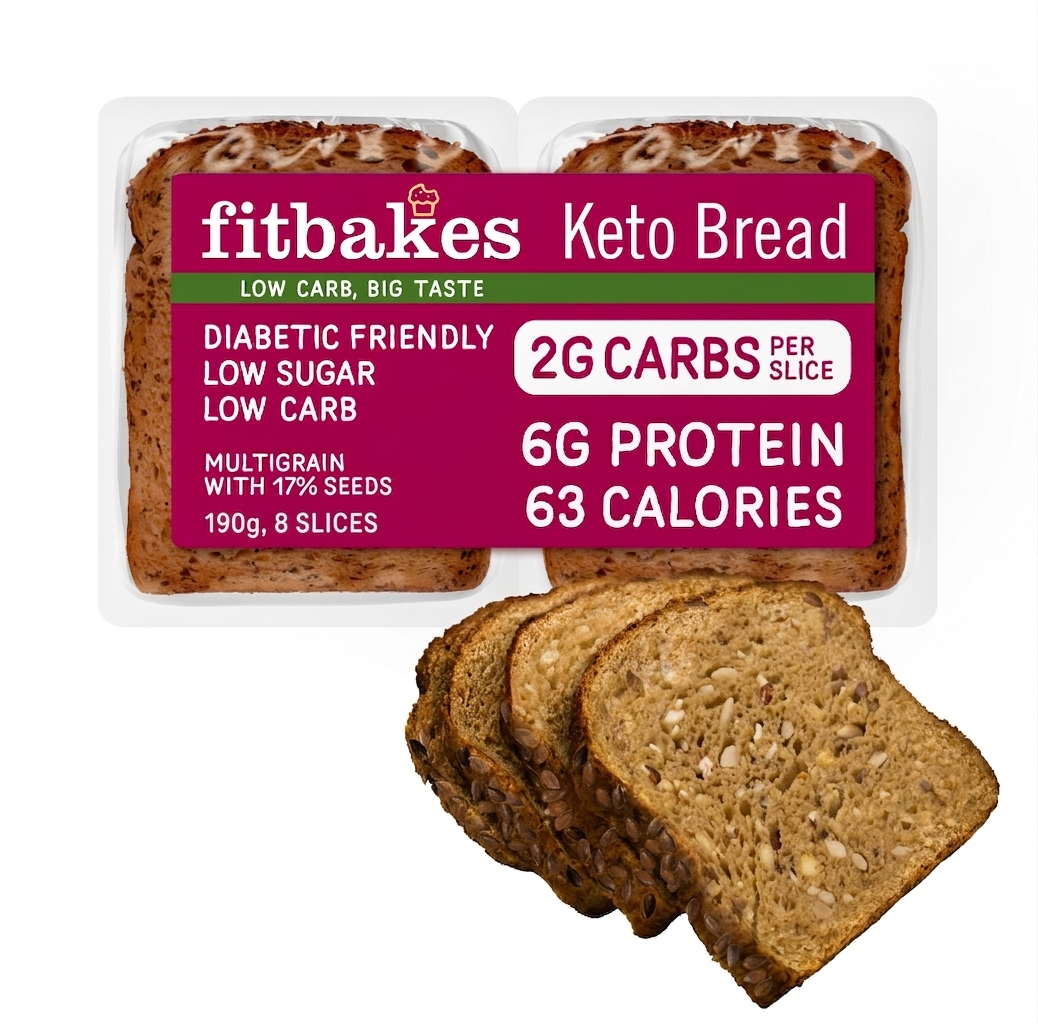
Image credit: fitbakes.co.uk
This makes it easier to evaluate products based on what you really eat rather than an advertised number. According to its marketing, Fitbakes Seeded Low Carb Loaf provides 0.8g net carbohydrates in each slice, or about 1.6g net carbohydrates in a sandwich made with two slices. Because the food item page also shows a 2g carbohydrate claim, it may be sensible to verify the nutritional panel.
Understanding the Difference With Keto Bread
The conversation around bread and keto often focuses on whether bread should be avoided entirely. Traditional wheat bread contains starch, which contributes a considerable amount to its carbohydrate content. Alternative formulations allow keto-friendly breads to offer a bread-like texture with fewer carbohydrates.
Even when a loaf is called keto-friendly, it may still contain carbohydrates. Remember to count the amount eaten along with spreads, fillings and the rest of your meals. For an individual preparing a two-slice sandwich, choosing lower-carb bread may create greater flexibility when planning the rest of the prepared food.
Seeds, Protein, and Everyday Nutrition
There is more to choosing a loaf than checking carbs. The manufacturer lists 7g protein per slice and a 17% seed content for Fitbakes seeded bread, including sunflower seeds and sunflower seeds. Fitbakes additionally states that the loaf provides 63 calories per slice. The seeds add flavour and bite; protein also plays an important role in normal body maintenance.
During a comparison of bread with low carbohydrates, consider these nutritional characteristics alongside ingredient lists and allergens. The lowest carbohydrate number does not necessarily make a particular product suitable for your particular diet.
Making Toast With Low-Carbohydrate Bread
People sometimes wonder whether lower-carb alternatives can feel like familiar bread. Compared with ordinary supermarket bread, some lower-carbohydrate loaves feel different. Fitbakes recommends toasting its Seeded Low Carb Loaf to make a nutty, golden result. At breakfast, pair it with a serving of scrambled eggs; at lunch, make an open sandwich with avocado, tomatoes and seasoning.
You could serve bread with low carbs alongside soup or use it as a convenient part of a convenient midday meal. Keeping familiar meals in your routine may help you adjust your diet without changing everything at once.
Reading the Label Before Buying
Understanding carbs in low carb bread requires more than looking at front-of-pack claims. Check the serving size, carbohydrate information, protein, fibre, and listed ingredients. UK nutritional labels generally report carbohydrates separately from fibre, whereas some international products use other reporting conventions.
A net carbohydrate claim deserves comparing with the food item’s complete nutrition information. Products with different weights per slice are easier to examine when you consider the full label.
A More Practical Way to Reduce Carbs
Eating fewer carbs need not mean giving up your favourite meals. Replacing conventional bread with a suitable alternative may allow you to continue preparing familiar breakfasts and lunches while adjusting your carbohydrate intake.
Fitbakes Seeded Low Carb Loaf is a seeded bread choice advertised by its manufacturer as low in carbohydrates and high in protein. Ultimately, the best choice is a bread that fits your own nutrition goals, tastes enjoyable, and works with the meals you regularly prepare.
